

Entangled Histories: Exploring the Interplay of Religion and Politics in Premodern Eastern Central Asia
Bringing together researchers working on the history of Eastern Central Asia, the workshop explored the complex relationships between religion, political legitimacy, diplomacy, and cultural exchange between the ninth and thirteenth centuries.
Organized by Dr. Emanuela Garatti and Prof. Dr. Carmen Meinert, the workshop built on the CERES research project INCENTER, which investigates competing centres of power in premodern Eastern Central Asia, including the Khitan Empire, the Chinese Song dynasty, the Tangut Empire, and local Tibetan principalities. The discussions examined how these political powers engaged with religious traditions, particularly Buddhism, to establish legitimacy, negotiate relationships, and connect societies across cultural and political boundaries.
Religion, rulership, and cultural exchange
The presentations approached the relationship between religion and politics from a range of perspectives, drawing on textual, archaeological, epigraphic, and visual sources. Together, they demonstrated that religious traditions were not simply transmitted across regions unchanged. Instead, they were adapted to local contexts, shaped by political circumstances, and embedded in wider networks of exchange.
Carmen Meinert opened the programme by discussing religious exchange in multicultural premodern Eastern Central Asia, drawing on findings from the ERC-funded project BuddhistRoad. Her contribution highlighted how local communities developed distinctive expressions of Buddhism while participating in a broader, interconnected Buddhist world. Bianca Horlemann subsequently examined the eleventh-century ruler Jiaosiluo of Tsongkha, exploring how Buddhist charisma and concepts of sacred kingship intersected with political authority and regional power.
Further contributions explored the relationships between religious imagery, historical memory, and political identity. Amy Heller examined representations of the rigs gsum mgon po, the “Protectors of the Three Families”, in early Tibetan Buddhist traditions. Diane Wen Zhang-Goldberg discussed a twelfth-century stele from the Heishui River, showing how Buddhist beliefs coexisted with older Tangut spiritual traditions and how Chinese and Tibetan influences shaped the religious landscape of the Tangut Empire.
Diplomacy and the construction of political authority
The second day turned to the connections between imperial power, diplomatic relations, and religious institutions. Lewis Doney used manuscripts from Dunhuang to investigate the relationship between Buddhism and the Tibetan Empire around the ninth and tenth centuries. His analysis highlighted how Buddhist textual production connected imperial authority with religious practice, while also revealing how people in less powerful social positions could use their Buddhist status to navigate existing hierarchies.
Emanuela Garatti examined diplomatic relations among the Khitan, Song, and Tangut courts and the Tibetan principalities between the tenth and twelfth centuries. Drawing on a large corpus of recorded diplomatic missions, she explored how envoys, ceremonial exchanges, and religious texts reflected the shifting balance of power in a multipolar political landscape. Her analysis demonstrated how network-based approaches can help make visible the relationships connecting different courts and political centres.
The final session focused on the Tangut Empire and the role of religious traditions in articulating and institutionalizing political authority. Romain Lefebvre approached the relationship between power and the sacred through Tangut textual sources, examining how language and terminology helped formulate concepts of rulership, law, and religious authority. Alla Sizova investigated the connections between Tibetan Buddhism, legal codes, and ritual practice in the Tangut state, asking how Buddhist institutions and traditions contributed to state ideology and political legitimacy.
The power of ordinary people
A keynote lecture by Prof. Naomi Standen, titled “The Power of the Powerless: Devotions, Politics, and Ordinary People as the Engines of History”, broadened the discussion beyond rulers and political institutions. It highlighted the importance of ordinary people and their devotional practices in shaping historical developments, drawing attention to forms of agency that can be overlooked when history is told primarily through the actions of powerful individuals and states.
Across the two days, the workshop brought together different regional case studies and methodological approaches to illuminate the many ways religion and politics became intertwined. The discussions demonstrated the value of combining close analysis of historical sources with comparative perspectives on broader patterns of cultural exchange, political negotiation, and religious pluralism.
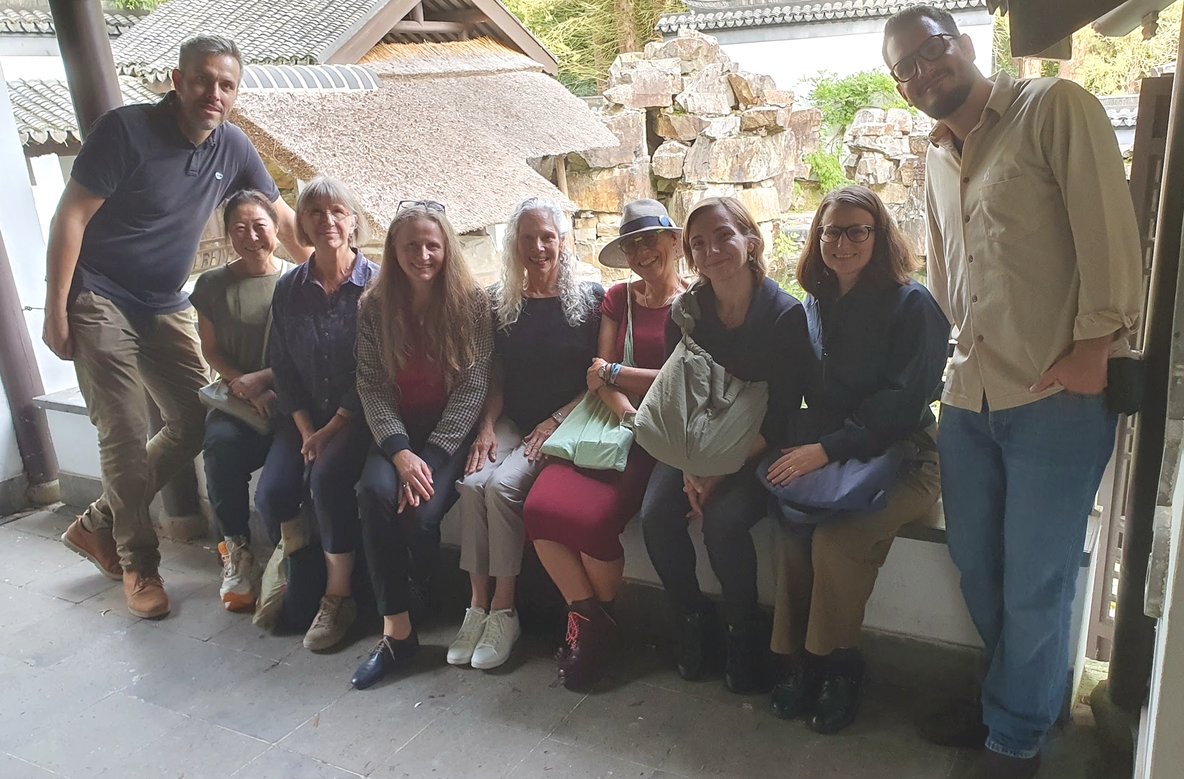
The workshop concluded with a closing discussion, followed by a guided tour of the RUB Botanical Garden (see photo).
By exploring the entangled histories of religion and politics in premodern Eastern Central Asia, the workshop also addressed questions that remain relevant today: how religious traditions are mobilized to legitimize political authority, how religious and cultural identities develop through interaction, and how communities negotiate power and pluralism. These perspectives reflect CERES’s broader research interest in the social and political efficacy of religion across historical and cultural contexts.