
From Peshawar to Bochum: Sharing Research, Building Connections
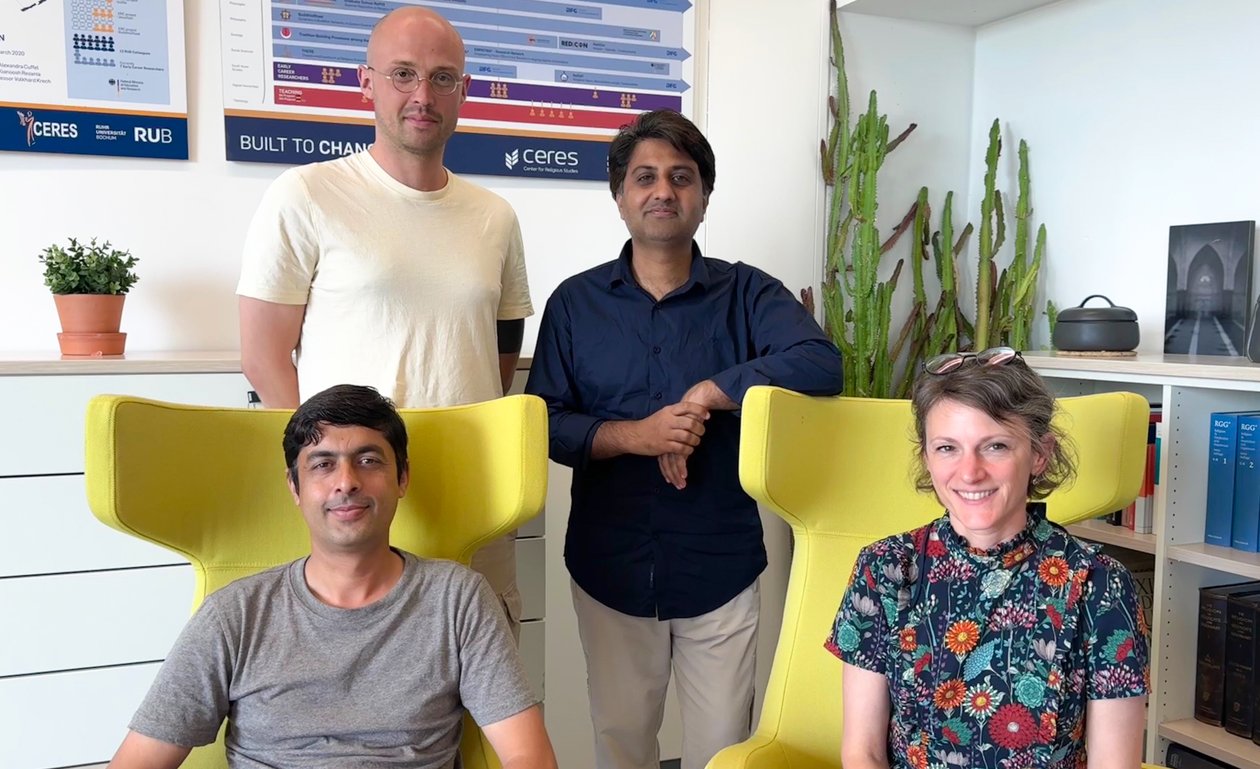
During their stay at Ruhr University Bochum, they are collaborating with CERES Researchers - Dr. Henry Albery and Prof. Dr. Jessie Pons, two scholars working on Gandhara - expanding their academic networks, and contributing to the ongoing exchange between both institutions. Their stay is funded by a grant from the Erasmus+ exchange programme, initiated by Dr. Serena Autiero (former member of the DiGA project) in collaboration with Prof. Dr. Jessie Pons. We spoke with our incoming students about their research, their first impressions of Germany, and their expectations for the weeks ahead.
Welcome to CERES, Muhammad and Abdul! It's a pleasure to have you here. Could you both briefly introduce yourselves and tell us about your work at the University of Peshawar?
Muhammad: I am Muhammad Waqar, a PhD student in Archaeology at the University of Peshawar. Alongside my doctoral research, I serve as an Assistant Research Officer at the SSAQ Museum of Archaeology and Ethnology, University of Peshawar. My research focuses on the palaeography of Brāhmī inscriptions from the archaeological site of Shatial (Indus–Kohistan).
Abdul: My name is Abdul Wahab, PhD student of Archaeology at University of Peshawar. I am working on Material Culture of Indo-Parthian dynasty in Gandhara who ruled during 1st century CE.
You are visiting CERES through the Erasmus+ exchange programme. What motivated you to take part in this exchange?
Abdul: I wanted to broaden my academic exposure and learn from European research perspective. The exchange offers a chance to grow academically and personally. Particularly CERES has been working on Gandharan artifacts through the project DIGA for the last 5–6 years. Being in regular touch with a team which is working on the same area as that of my doctoral research would significantly enhance my understanding of these artifacts especially in terms of religious studies.
What were your expectations before coming to Germany, both academically and personally?
Muhammad: I expected strong academic engagement, access to diverse research perspectives, and a chance to grow personally by experiencing a new culture and adapting to life in Germany.
How important are international collaborations for archaeology and for your own research?
Abdul: International collaborations are vital because archaeology depends on shared knowledge, diverse methodological approaches and comparative studies. Such collaborations strengthen research quality and broaden understanding. It is particularly important for my research as I study the material culture of a dynasty and deal with various type of artifacts that require careful and accurate interpretation. This level of precision is possible only through a broad and active academic network.
What have been your first impressions of CERES and Ruhr University Bochum?
Muhammad: CERES and Ruhr University Bochum immediately impressed me with their welcoming academic environment, well-organized research culture, and the openness of faculty and students, which made it easy to feel integrated from the very beginning.
The first days of an international visit often involve a lot of paperwork and practical arrangements. How has your experience been so far?
Abdul: The process has been smooth and well-guided. The assistance of our host team at CERES made it even smoother. I am grateful for the helpful staff and colleagues.
Have there already been any moments or encounters that stood out to you?
Muhammad: A few early interactions with CERES colleagues stood out, their warmth, helpful guidance, and genuine interest in my research made the first days feel encouraging and academically energizing.
Are there any research areas, projects, or collaborations here that you are particularly excited about?
Abdul: The ongoing exchange programme is highly significant for students, enabling them to visit other universities, gain expertise, and learn new methodologies. The DIGA project at CERES is also a significant initiative for archaeology students interested in Buddhist and other ancient religious traditions. I am particularly interested in comparative religious studies through coins and sculptures.
What do you hope to gain from the academic exchange with your colleagues at CERES?
Muhammad: I hope to gain clearer perspectives, new ideas, and useful feedback from colleagues at CERES. Working with them will help me improve my research and build strong academic connections.
Beyond your academic work, what are you hoping to experience during your time in Germany?
Abdul: I want to explore local culture, experience everyday life in and around Bochum, and visit museums and archaeological sites.
What aspects of German academic or university life have surprised you so far?
Muhammad: I’ve been pleasantly surprised by the informal, open communication style, the strong culture of punctuality, and the high level of independence expected from students and researchers in German university life.
Your stay continues until the end of July. By the time you return to Peshawar, what would you like to have achieved?
Abdul: I aim to complete my planned academic tasks, learn new methods and strengthen institutional links. I also hope to explore future collaboration opportunities between CERES/RUB and the University of Peshawar.
How do you think this exchange will influence your future research or work life back at the University of Peshawar?
Muhammad: This exchange will help me bring broader perspectives, stronger comparative methods, and new academic connections back to the University of Peshawar. It will enrich my teaching, sharpen my research approach, and support future collaborative projects with colleagues in Pakistan and abroad.
Do you see opportunities for future collaboration between the University of Peshawar and CERES?
Abdul: Yes there is strong potential for joint research, student mobility, and shared academic initiatives. The present programme forms the foundation of a solid and long lasting academic partnership between CERES and the University of Peshawar.
If you had to describe your experience at CERES so far in three words, what would they be?
Muhammad: Engaging, welcoming, inspiring.
Have you discovered a favourite German dish, place, or tradition yet?
Abdul: I have enjoyed some delicious food at Mensa and at Bochum city with our host Professor. I have visited few places, and the most beautiful among them was Hercules Kassel. As for tradition, I find it inspiring that the German people always hold the door open for the person coming after them regardless of who it is.
What advice would you give to colleagues who are considering taking part in an international exchange programme like Erasmus+
Muhammad: I would advise colleagues to be open-minded, embrace new academic environments, and actively engage with people during an Erasmus+ exchange. It’s a great chance to learn, grow, and build meaningful international connections.
Thank you both for taking the time to speak with us. We wish you a productive and enjoyable stay at CERES and look forward to hearing more about your experiences over the coming weeks.