Guest lecture by Seema Bawa, professor specializing in History of South Asian Art and Culture at Department of History, University of Delhi
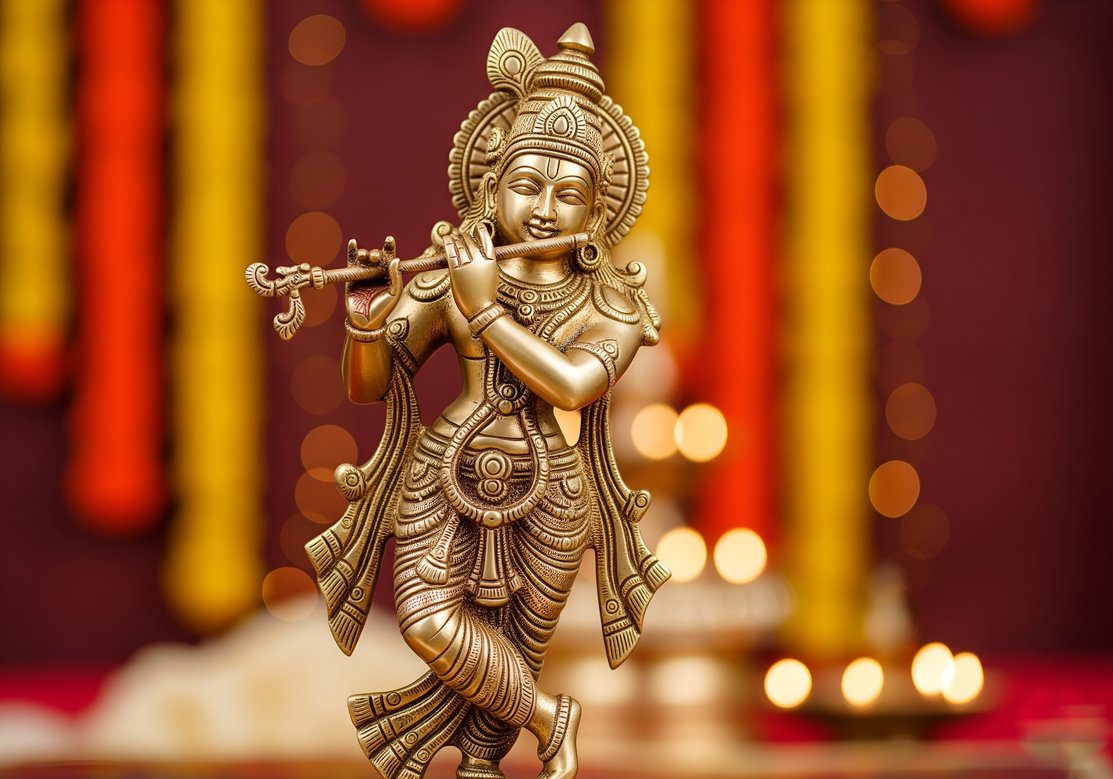
The talk examines the multivalence of meanings through which Kṛṣṇatva—Krishnahood—is described and experienced. These meanings operate through rupaka (metaphor) and other visual and literary devices, collectively termed alaṃkāra in Sanskrit aesthetics. Historically, Krishna cannot be reduced to a singular persona; rather, he has emerged over time through a succession of manifestations that may loosely be termed metaphorical: from Nārāyaṇa-Vāsudeva to Śyāma to Brij Bihārī to Kaṇha. Each name and form carries connotations that attend not only to the Lord's form but also to the differential modes in which the devotee experiences and “sees” Him, as particular and as Universal. These have been translated into the visual experience through sculptures, paintings, and popular prints, all serving different purposes and varying degrees of devotional experience.
Another way of “reading” Krishna is through the Bhāgavata traditions of the various sampradāyas of Kṛṣṇa devotion. In these traditions, each body part represents both the ideational and the physical; even the colour of his body serves as a metaphor for the cosmos, such as in the Bhāgavata traditions. Padma Purāṇa maps twelve cantos onto Krishna’s body, establishing a direct correspondence between scriptural structure and divine anatomy.